
Send invoices that meet European law – automatically.
The European Union is pushing for full digitization of business processes – especially invoicing. With Directive 2014/55/EU and national regulations (like Germany's starting in 2025), structured electronic invoicing will become mandatory across the EU.
- Invoices must be machine-readable and conform to the EN16931 standard
- Simplifies invoicing and reduces administrative costs
- Increases transparency and combats VAT fraud
- Streamlines public procurement across EU member states
- Supports digital transformation for businesses of all sizes
These changes are part of the EU's broader effort to modernize business processes and enable seamless cross-border commerce.
Compliant with EU Directive 2014/55/EU
EN16931 standard
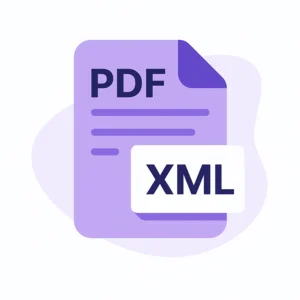
Not just a PDF. A smart, structured invoice.
When we say "digital invoice," we don't just mean sending a PDF by email. A true electronic invoice is a file that your accounting software can read and process automatically — without manual typing or scanning.
That's why the EU requires standardized formats like ZUGFeRD and Factur-X, which embed a machine-readable XML file directly inside a human-readable PDF.
It looks like a normal invoice to you, but for accounting systems, it's a fully structured dataset. This ensures accuracy, automation, and compliance with legal requirements.
The legal side – made simple.
- Directive 2014/55/EU: All EU member states must support e-invoicing in public procurement.
- Germany (2025–2028): B2B e-invoicing mandatory in phases. ZUGFeRD is an accepted format. docs101 is fully compliant.
- 10 more EU countries: Cyprus, Malta, Austria, Netherlands, Ireland, Czech Republic, Slovakia, Sweden, Finland, and Denmark have no B2B e-invoicing mandate — PDF is fully legal, and docs101 exceeds the minimum with EN 16931-compliant invoices.
- On our roadmap: Italy (SDI), Romania (e-Factura), Poland (KSeF), Belgium, Croatia, Latvia, Spain, Greece (myDATA), and Hungary (RTIR) — we're working on integrating their national systems.
- Accepted formats: ZUGFeRD, Factur-X, XRechnung, Peppol BIS 3.0
You're already prepared — for today and for all of Europe.
When you send invoices with docs101, they're already compliant — and we're actively building integrations to cover every EU country:
- ✔ PDF/A-3 format with embedded XML
- ✔ 100% compliant with ZUGFeRD and Factur-X
- ✔ Accepted by public and private recipients across the EU
- ✔ Built on EN 16931 — the standard the EU will mandate for all cross-border invoicing via ViDA (~2030)
- ✔ From invoice to accounting — in one click, including DATEV-compatible EXTF for Germany
ZUGFeRD-compliant invoices with every payment method
Your e-invoices include the correct UNTDID 4461 type code for every payment method — bank transfer, credit card, PayPal, and more. Compliance that extends to the payment details.
Obligation
Is this legally required for freelancers?
Yes, starting in 2027 in Germany, all businesses — including freelancers — must send electronic invoices for B2B transactions. Other countries follow similar rules.
Availability
In which countries can I use docs101?
docs101 is fully compliant in Germany and France, where ZUGFeRD/Factur-X meets the new B2B e-invoicing mandates. It also works without restrictions in Cyprus, Malta, Austria, Netherlands, Ireland, Czech Republic, Slovakia, Sweden, Finland, and Denmark — these countries have no B2B mandate, so PDF invoices are fully legal. Countries like Italy, Poland, Romania, Belgium, Spain, and others with national e-invoicing systems are on our roadmap. For cross-border B2B invoices, docs101 works everywhere in the EU — national mandates end at the border.
Deadlines
From when is electronic invoicing mandatory, and for whom?
EU Directive 2014/55/EU mandates e-invoicing in public procurement since 2019. In Germany, B2B electronic invoicing becomes mandatory in phases: From January 1, 2025: Businesses must be able to receive e-invoices. From January 1, 2027: Obligation to send e-invoices for companies with revenue above €800,000. From January 1, 2028: Applies to all businesses, including freelancers. In France, B2B e-invoicing rolls out from 2026 (large companies) to 2027 (all businesses). Legal references: German Federal Ministry of Finance and official EU documentation on Directive 2014/55/EU.